


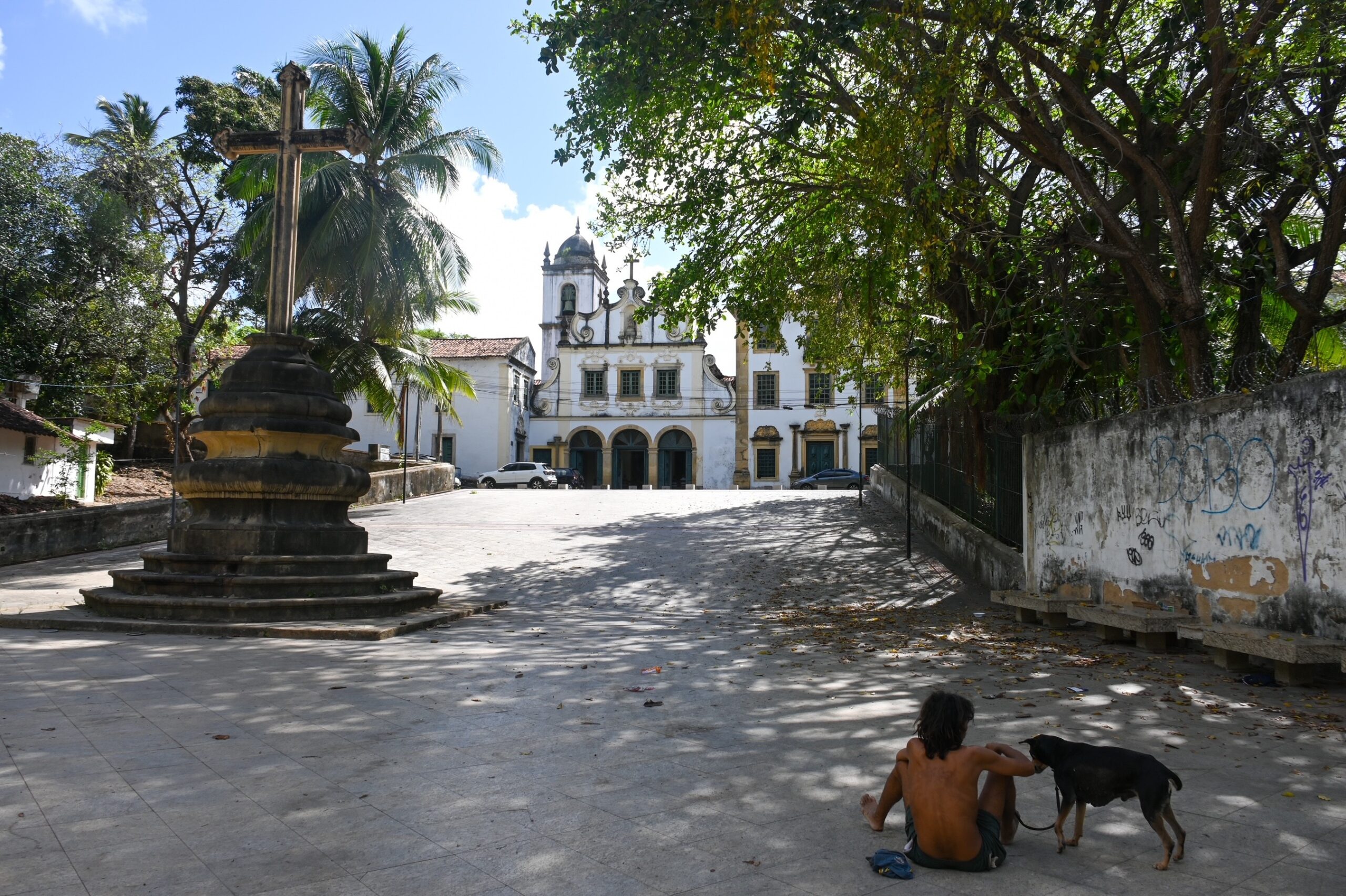
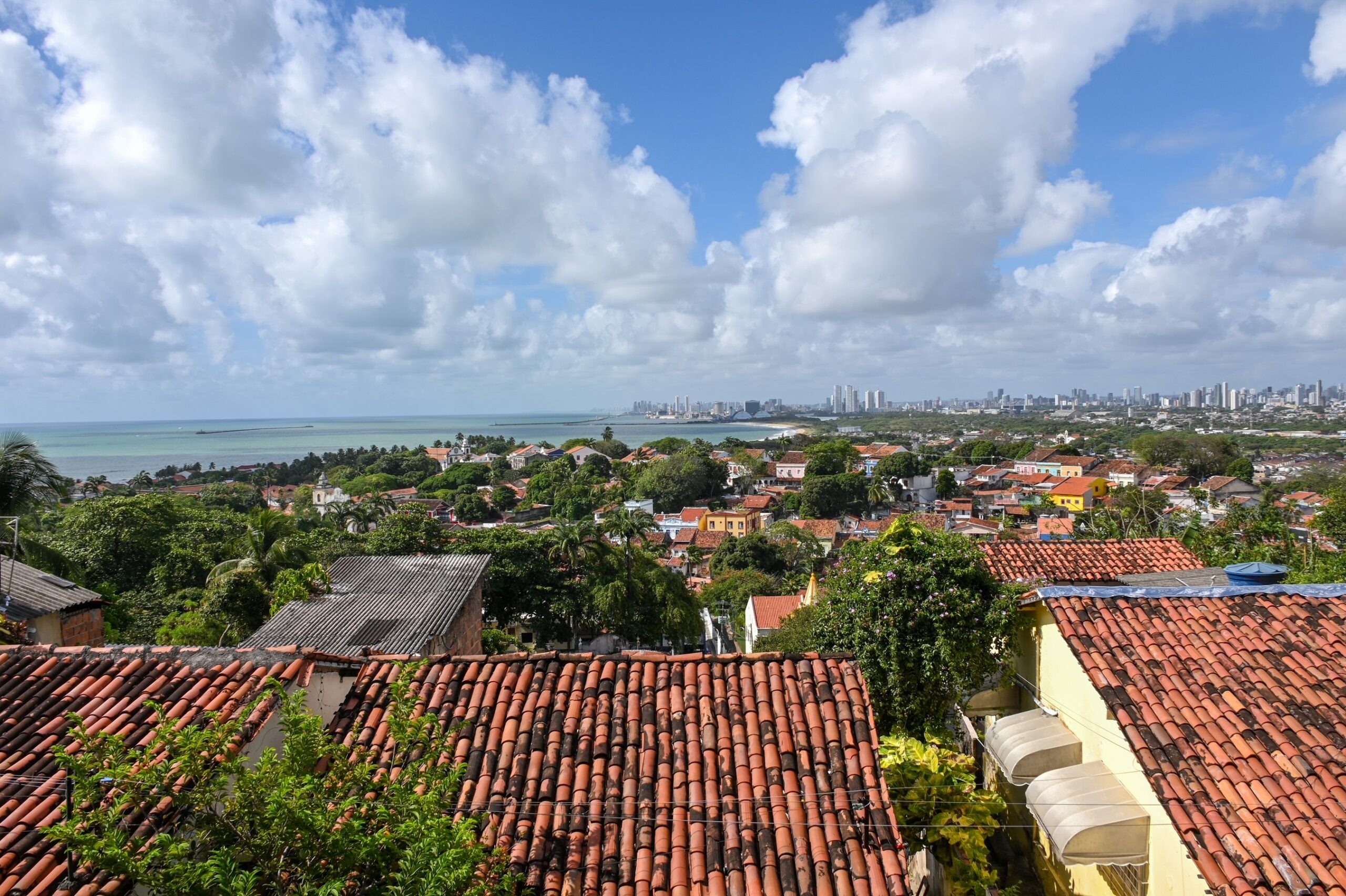
We had just arrived from the airport and had entered the address of our hotel in Olinda, the former capital of the state of Pernambuco, into Uber. We had crossed Recife, the new capital, along the Capibaribe River before following the coast northward. Leaving the coastal road for the narrow streets of the city center, our car had to slow down and then stop. A procession of giants and musicians occupied the road, advancing to the rhythms of samba, followed by a festive crowd dancing with caipirinha or beer in hand. It was November 15, and Olinda was celebrating the proclamation of the Brazilian republic. A few minutes later, we dropped off our luggage in our room and joined the party. Our arrival reminded us that in Brazil, it’s easy to find music and dance just around the corner. At the end of the week, we celebrated Black Awareness Day on the same cobblestones.

I rediscovered the beautiful old houses in Olinda’s vibrant colors while watching the film “Entre Irmas (Between Sisters)”. This feature film is an adaptation of the novel by Brazilian author Frances de Pontes Peebles, written in English under the title “The Seamstress”. The novel begins in the 1930s in the small town of Taquaritinga, in the dry interior of Pernambuco, far from the ocean, Recife, and Olinda. Frances de Pontes Peebles ran the family coffee plantation before turning to writing. In her book, two orphans, Luiza and Emilia, work with their aunt as apprentice seamstresses. Emilia devours the fashion magazine “Froufrou” and dreams of Parisian salons, while Luiza, who has a deformed arm since falling from a tree, loves to walk outside and free birds from their cages. Their main client is the wife of the local “colonel”: a large landowner who also lays down the law and dispenses justice in these isolated lands of northeastern Brazil, forgotten by the central government.
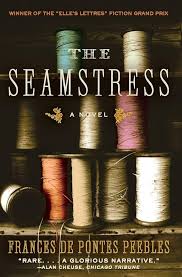

While they are still teenagers, the town is attacked by a band of “Cangaceiros.” These are outlaws who loot and do not hesitate to kill, but whom the local people see as a kind of Robin Hood because they mainly target the colonels and sometimes share their spoils with the poor. The leader of the Cangaceiros, nicknamed the Hawk, requisitioned the two sisters and their aunt to make them new clothes. As he left, he ordered Luiza to join his group.
With her sister kidnapped by the bandits and presumed lost, Emilia finds herself alone after the death of her aunt. But she meets the elegant Degas Duarte Coelho, who has come from Recife to spend the holidays with the colonel’s son, his friend at law school. Degas proposes marriage to Emilia and takes her back to Recife to live with his family.

Emilia gradually learns, not without difficulty, the manners and customs of Recife’s high society. But she is surprised by her husband’s lack of enthusiasm for joining her in their bedroom at night. She tries to forget her disappointments by making a name for herself in fashion.

Luiza, for her part, has been accepted into the Cangaceiros gang. She becomes the Hawk’s wife, and after his death, takes command of his group. The bandits oppose the arrival of the train in the “Sertão,” while the new President of the Brazilian Republic is counting on this means of transport to develop and pacify the interior of the Nordeste.
When she comes across a pile of old newspapers during her raids, Luiza tracks the society pages to follow her sister’s rise in the salons of Recife. Emilia, meanwhile, sees her sister’s face among the “most wanted” in those same newspapers. She fears being recognized as the sister of a gang leader, but when she is offered an opportunity to see Luiza again, she does not hesitate.

I really liked this novel, which is constructed like two strands of thread that intersect: like the destinies of Luiza and Emilia, or like that of the rich coastal cities, such as Recife and Olinda, its beautiful and festive neighbor, and the arid lands of the Pernambuco interior.